
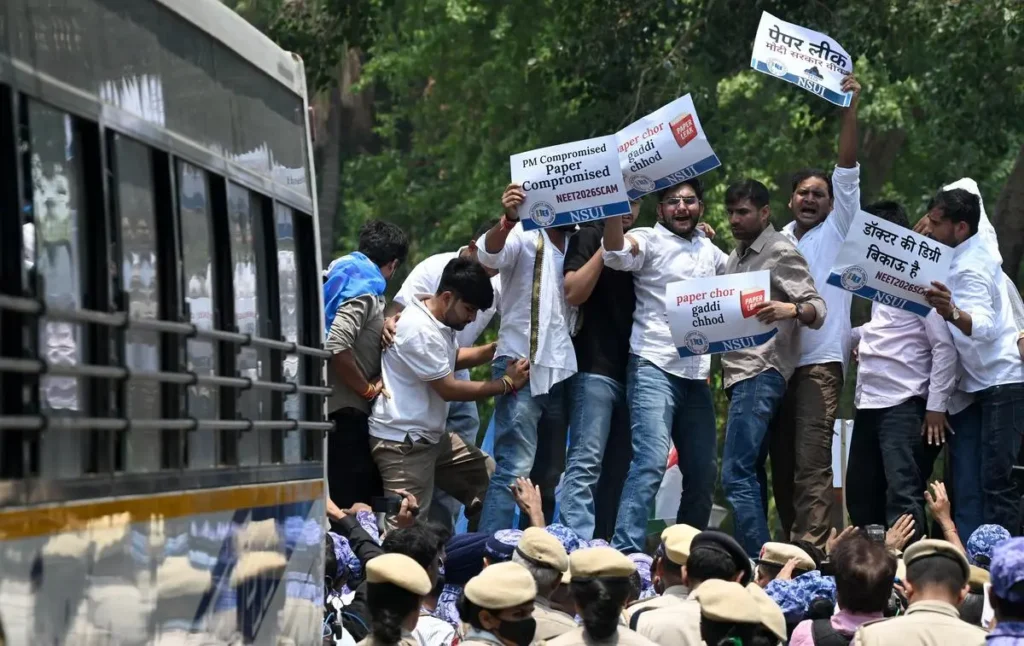
The controversy revolves around NEET UG 2026 is allegations of irregularities in the examination process. Students across all over India have questioned the transparency of the exam, leading to widespread protests and legal challenges.
Major concerns include:
- Alleged paper leak claims
- Technical glitches during the examination
- Delays in releasing answer keys
- Objections to the result process
- Demands for re-examination
- Calls for reforms in the National Testing Agency (NTA)
These issues have triggered wide spread student protests involving some major personalities like Sonam Wangchuk, Arundhati Roy etc and social media campaigns demanding justice for medical aspirants.
Why Are Students Protesting?
Students believe that every candidate deserves an equal opportunity to compete fairly. Protesters have demanded:
Fair Evaluation
Candidates seek a transparent and error-free evaluation process.
Independent Investigation
Many students have called for an impartial inquiry into allegations of examination irregularities.
Transparency by NTA
Students want the National Testing Agency to promptly address grievances, publish clear explanations, and strengthen security measures
Impact on Medical Aspirants
The ongoing controversy has created uncertainty among lakhs of students.
Possible impacts include:
- Delay in counselling
- Anxiety among candidates
- Uncertainty regarding admissions
- Increased legal scrutiny of entrance examinations
- Possible reforms in future NEET examinations
What Happens Next?
Authorities are expected to examine complaints, respond to legal proceedings, and continue the admission process in accordance with applicable laws and court directions. Students are advised to rely only on official announcements from the National Testing Agency (NTA) and the Medical Counselling Committee (MCC) rather than social media rumours.
The NEET 2026 controversy highlights the growing importance of transparency and accountability in India’s competitive examination system. Regardless of the final outcome, the protests have reinforced the need for stronger examination security, timely grievance redressal, and greater public confidence in the medical admission process.